
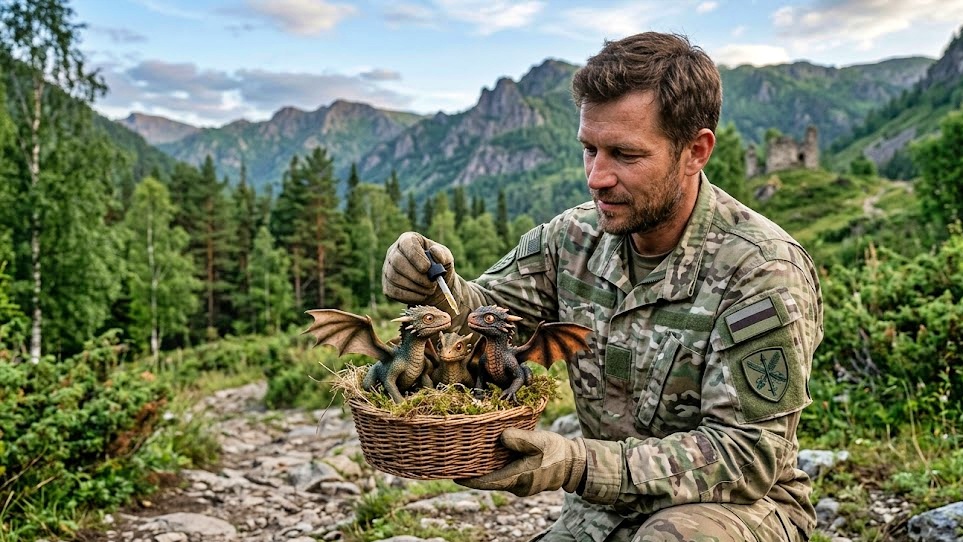
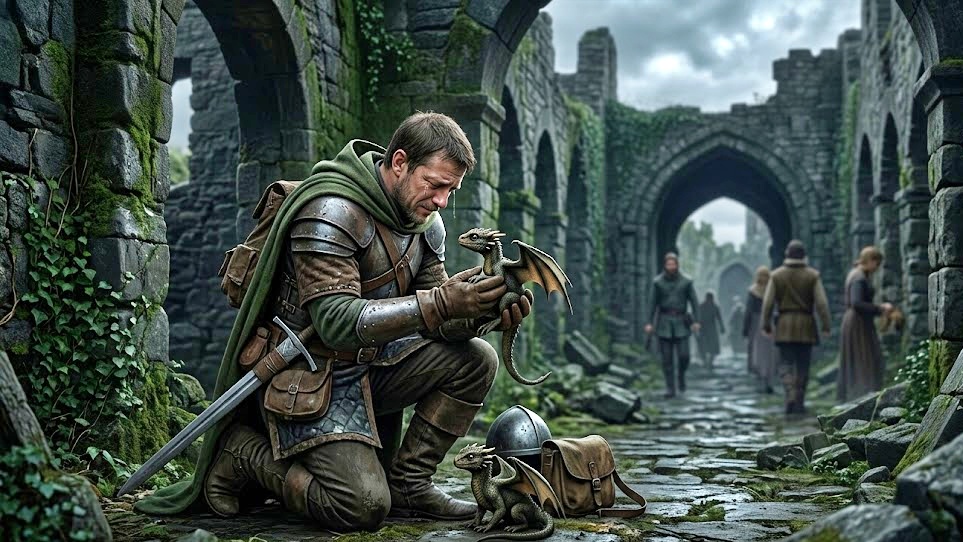
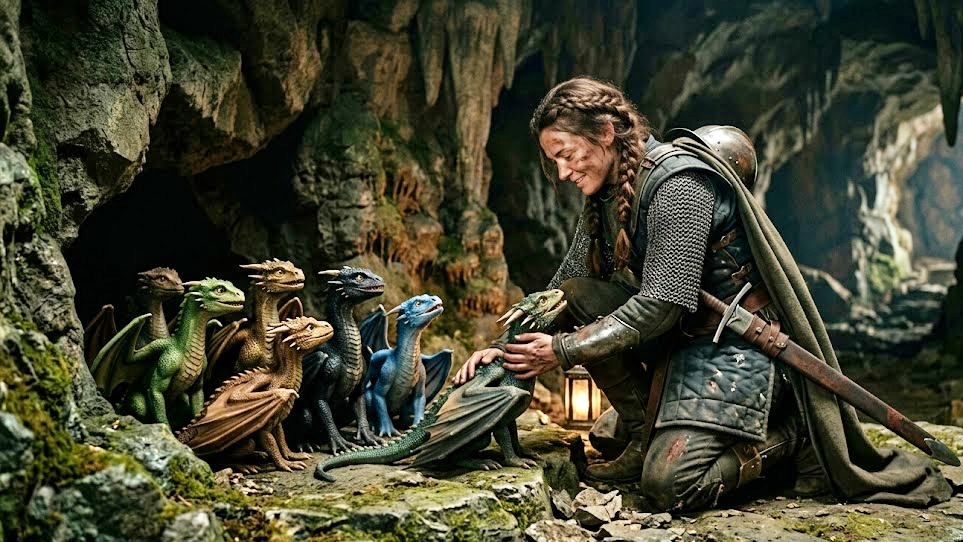
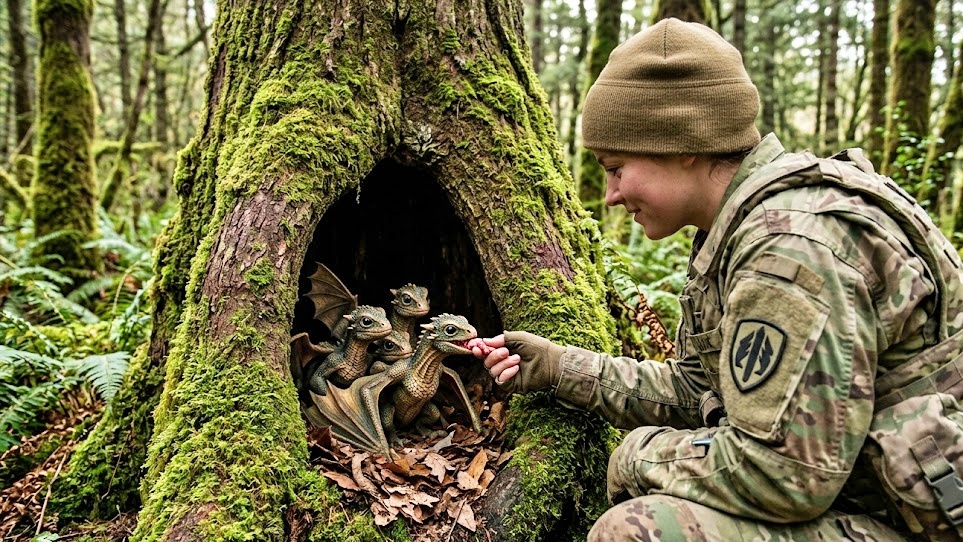
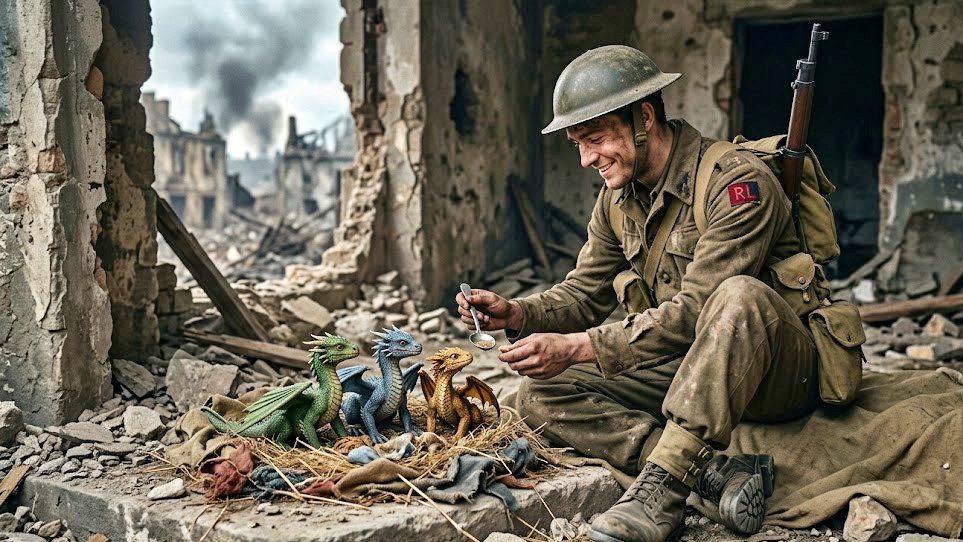
The wall had a sound. Reed Callaway noticed it on his third pass through the building. Not wind, not settling stone, something else. Something that came and went like a creature trying very hard to stay quiet, but not quite managing it that he stopped walking. He stood still in the middle of what used to be a large room. high ceiling now mostly fallen. Broken columns lying across each other like old bones. The battle here had ended three days ago. The Draven city had gone silent after that. The kind of silence that only comes when everything that was fighting is either dead or gone. Reed’s unit had moved to the next grid. He had been sent back alone to sweep for salvage and check for any survivors left in the rubble. as oar. He had found two broken power cells, a cracked water processor, and nothing alive. Until now, he turned his head slowly. The sound came again from the far corner behind a section of collapsed wall that had fallen inward. The slabs were stacked at an angle, leaning against each other, making a kind of low, dark space underneath. Reed moved toward it carefully, rifle up, stepping over loose stone without looking down. He had learned a long time ago that you watch the direction of the threat, not your feet. He crouched at the edge of the fallen slab and clicked on his helmet light, point five pairs of eyes, looked back at him, but he did not move. They did not move. For a long moment, nothing happened except Reed’s brain working very fast and very quietly to process what he was seeing. They were small, each one about the size of a large dog, maybe a little bigger, curled tight against each other in a hollow space in the rubble. Their scales were dark, deep gray and brown, with faint patterns that shifted when light hit them at different angles. Their heads were narrow, snouts short, eyes wide and reflective like an animal that lived in low light for limbs each, and something folded along their backs that would one day be wings. but right now looked more like crumpled paper. Dragon hatchlings. Dragon origin. Young, very young, maybe weeks old at most. Reed moved his lights slightly to the left and then he understood why they were still here and not somewhere else. The mother was behind them. She was large, easily three times the size of a grown man, maybe more, with a wingspan that must have been enormous in life. She was lying flat across the base of the fallen wall. Her body positioned in a way that was not an accident. Her back was pressed against the heaviest slab. Her legs were braced against the floor. She had held the ceiling up, not for herself, for the hollow behind her, for the nest. She was dead, had been dead for at least two days by the look of it. But the hollow she had made with her own body, the space she had kept open by not moving even as the building came down around her, that space was still there, still intact, still keeping five small things alive. Reed sat back on his heels and looked at the hatchlings again, point one of them. The boldest one, the one sitting slightly in front of the others, had not looked away from him once. It was watching him with an intensity that felt too focused for something so young. Its nostrils were working, reading him. Reed reached up and turned off his rifle’s targeting laser. Then he slowly lowered the weapon and set it across his knees. The bold hatchling made a sound. Not a growl, not a hiss, something in between, short and sharp, like a question. Do Reed’s comm’s unit clicked on his shoulder, static. Then his sergeant’s voice, broken and distant. Callaway, you find anything in grid 7? Reed looked at the five hatchlings. He looked at the dead mother braced against the fallen stone. He thought about what he was supposed to say. He thought about the word biological assets, which was what command used when they found living things that were not human and were not sure yet what to do with them. He thought about the forms, the holding pens, the researchers who would arrive with equipment and no patience. Negative, he said into the comms. Grid 7 is clear. Nothing here. The static cut out. Reed stayed crouched where he was for a while. The bold hatchling had not moved. The other four were pressed together behind it, watching Reed the way small things watch large things with total attention and very little trust. Reed opened the side pouch on his pack and pulled out an emergency ration bar. He broke a piece off. He held it out low, not toward the bold one, but just in the space between them. An offer, not a push. The bold one leaned forward half an inch. Sniffed, pulled back, waited. Reed set the piece of ration bar on the ground and moved his hand away. They watched each other. After a while, the bold hatchling came forward, took the piece, went back. The others watched it eat. Then the smallest one, small enough that Reed could have held it in both hands, pale around the edges of its scales in a way that looked wrong, like sickness or cold, made a soft sound. The bold one nudged the piece it had taken and broke a bit off for the small one. Reed watched that. He did not say anything. He just watched, be by the time the sun outside had moved enough to change the angle of light coming through the broken roof. Reed had fed them two full ration bars between the five of them. He had not touched any of them. He had not tried. He had just sat there on the dusty floor of a ruined building on an alien world and been present and not left. When the cold came in as the light faded, he unclipped the thermal blanket from his pack and shook it out. He laid it near the hollow, but not inside it. Not too close. He wrapped the other end around his own shoulders and sat with his back against a chunk of fallen column. The bold hatchling watched him do all of this. Reed looked at it. I don’t have a plan, he said quietly. Just so you know. The hatchling blinked once slowly and then sat down with a small thump, wings still half crumpled, eyes still on him. That it was Reed thought of a reasonable response. He did not sleep much that night, but neither did he leave. And by morning, the smallest hatchling, the pale, sickly one, had crawled out of the hollow and was sleeping two feet from Reed’s left boot. He looked at it for a long time. Then he reached into his pack for the last of his ration bars.
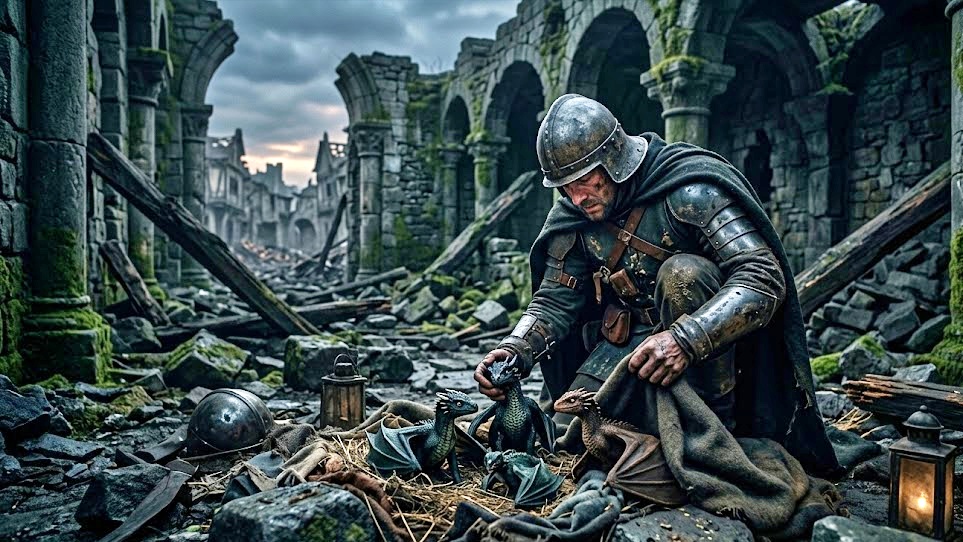
Dawn was coming. He had no plan. Five orphan dragon hatchlings and a dead mother who had held up a building with her own body rather than let them die. He figured the least he could do was stay. Hunger is a very honest thing. It does not care about species or war or the fact that a man has absolutely no idea what he is doing. It just keeps coming back every few hours reliable as gravity. Reed learned this the hard way by the second day that he had figured in a loose and optimistic way that the hatchlings would eat the same kind of thing. He was wrong. Cinder, the bold one, the one who had first approached him, the one Reed had started calling Cinder in his head because of the dark reddish patch across its chest, would eat almost anything Reed offered. Broken ration bar, dried protein strips, even a piece of the synthetic bread that tasted like salted cardboard. Cinder ate it all and looked at Reed afterward like it was waiting for the next course. Grit, the second largest, was different. Grit would sniff everything for a long time, take one small bite, and then step back and look at the food with deep suspicion as if it had done something offensive. Half the time, Grit refused entirely. The other half, Grit ate slowly with the expression of someone doing a favor. Lon barely ate at all the first day. Just watched, watched Reed, watched the others, watched the light change in the broken building. Then on the second evening, while Reed was reorganizing his pack, Lon walked over and ate directly from the open side pocket. Just helped itself, didn’t ask. Reed found this so surprising that he laughed. A short, real laugh, and Lon looked up at him with calm, level eyes, and then went back to eating. Fleck was chaos in a small body. Fleck ate fast, moved fast, knocked things over, picked them up, put them somewhere else, and once chewed through the strap on Reed’s secondary pack before Reed caught it. Fleck also made more noise than the other four combined. Not aggressive noise, just constant, busy exploratory noise, the kind of noise a creature makes when the world is endlessly interesting and it cannot process all of it fast enough. And then there was Rook. Rook was the one Reed worried about. The palenness around the edges of the scales was still there, and up close in daylight, Reed could see that Rook breathed a little too fast. Shallow breaths. The small body would shiver sometimes even when it wasn’t cold. The other hatchlings kept close to Rook, which Reed thought might be Instinct, keeping the small one warm. But Instinct alone was not going to be enough. Reed spent the better part of the second night sitting with Rook, warming the small creature with a thermal blanket wrapped around both of them and trying to get it to eat soft pieces of ration bar soaked in the drinking water from his canteen. Rook ate a little, not enough, but a little by. The third morning, Reed had used up his personal rations. He needed to go back to base to resupply. Dot. He spent an hour thinking about this problem. He couldn’t take the hatchlings to base. He couldn’t leave them alone in the ruins without food. He couldn’t tell anyone at base why he needed triple rations without explaining himself. He went back to base, filled his pack with every ration pack he could reasonably take from the supply room without it being logged as suspicious. Grabbed two extra thermal blankets from the storage unit near the medical bay and told the supply clerk he was prepping for a longer sweep in grid 7. The clerk didn’t ask questions. clerks rarely did when soldiers looked tired and certain the same time. Reed built the shelter on his third day back with the hatchlings. Not much. He was working with what the ruins offered. He cleared a section of the building that still had three walls and part of a ceiling, blocked the open side with stacked rubble, left gaps for air, and lined the floor with the extra thermal blankets. It was not beautiful. It would keep the wind out and hold warmth. That was enough. Cinder inspected every part of this construction carefully, walking the perimeter twice before sitting in the middle of it and apparently deciding it was acceptable. Fleck immediately began pulling at a loose piece of the rubble wall Reed had built. Don’t, Reed said. Fleck looked at him. Hold the piece again. I said don’t. Fleck let go of the piece, sat down, and began chewing on Reed’s bootlace instead. Reed looked at the sky through the broken section of the roof and breathed slowly. On the fourth day, Fleck found the emergency comm’s unit in the outer pocket of Reed’s pack. Reed did not notice until he heard a clicking sound from across the shelter and turned to find Flex sitting on top of the pack. The comm’s unit held in both front paws, pressing every button with focused intensity. Reed moved faster than he had moved in a week. He crossed a shelter in four steps, took the comm’s unit from Fleck, who held on for a moment longer than was polite, and checked the screen. Three buttons pressed, none of them the broadcast button. Reed stood there with the unit in his hand and let out a very long breath. “You’re going to give me a heart attack,” he told Fleck. Fleck made a sound that was suspiciously close to contentment. Reed started keeping the outer pockets buckled after that at it. was on the fifth day that he first saw the old alien that he had stepped outside the shelter to check the perimeter. Moving quietly through the larger ruined section of the building when he noticed a shape near the far wall. Tall, thin, wrapped in something dark, standing very still in the shadow of a collapsed column. Not hiding exactly, just being still in the way that old things are still. Not because they are afraid, but because they have learned that movement draws attention they don’t always want. Reed stopped, put his hand near his sidearm, but did not draw. The shape did not move. Reed waited. After a while, the shape made a sound. Low, rough, and then resolving into something almost like words. Five, it said in broken human standard. There were five. Reed looked at the figure for a long moment. Yes, he said. Five. The shape nodded slowly. I watched since first night. A pause. You are still here. I’m still here. Reed agreed.
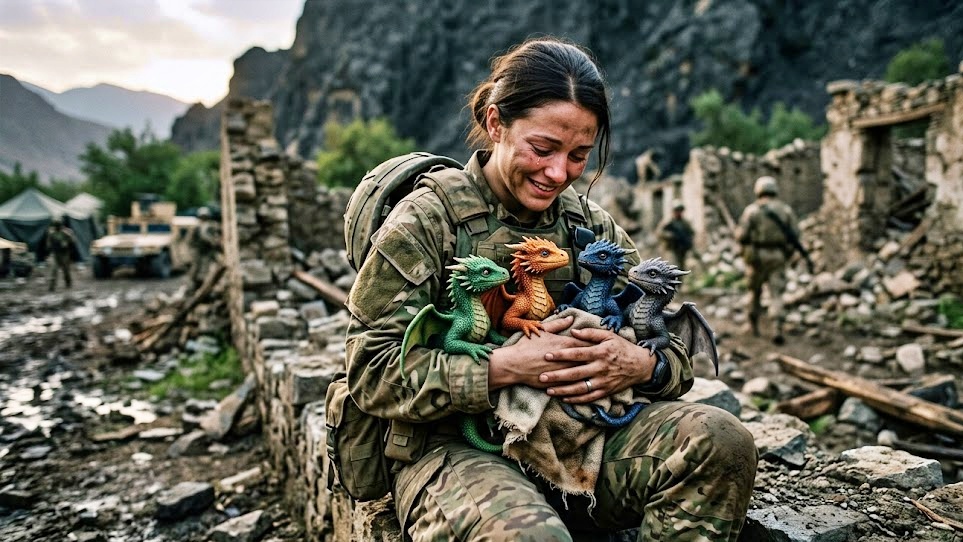
The figure was quiet for a moment. Then you kept them alive. Three hatchlings die in first week. Usually with no mother. You kept them alive. Another pause longer this time. That is not nothing. Reed didn’t answer right away. He looked back at the shelter where he could hear Fleck doing something that would probably require him to rearrange the supply corner again. He turned back to the old alien. Who are you? Galshan, the figure said. I’m the last of the ones who used to care for them. A long exhale, like the weight of that sentence, had a physical shape. I thought the clutch was gone. I came to the ruins to see, to know for certain. Galshin looked at Reed with eyes that were pale and old and very steady. Instead, I found a human soldier sitting in the dark feeding babies ration bars. Reed almost smiled. It wasn’t a great plan. No, Gausian said, but it worked. A pause. Most plans at work are not great plans. They’re just plans that someone kept trying. That evening, Rook ate more than any night before. Not much, but more. Reed sat beside the small hatchling for a long time after the others had settled, just watching the shallow breathing, counting the seconds between each one, feeling relief move through him slowly like warm water. He was in over his head. He knew that. He had known it from the first night. He was a soldier with no training for this. Running out of cover stories, sitting on borrowed time in a ruined building on a planet that was still technically a war zone. But Rook was breathing. All five of them were breathing. And an old alien who knew what these creatures were had walked out of the dark to tell him that what he had done was not nothing. Reed decided quietly and without ceremony that he was going to keep going. Galshin did not explain everything at once. The old aliens spoke the way people speak when they have held something inside for a long time. Carefully in pieces, as if saying it all at once might break something. Reed did not rush. He had learned by now that patience was the most useful thing he owned. They sat in the outer section of the ruins, away from the shelter where the hatchlings were sleeping. The night was cool. Gausian had brought something wrapped in cloth, a kind of dried food, dark and dense, and shared it without comment. Reed ate it without asking what it was. It tasted like something between smoked meat and bitter root. Not bad. The high flame line, Galian began, staring at a fixed point in the middle distance. Goes back 900 years, maybe more. Before the war councils, before the city factions, there was a time when the dragon kin had no allegiance to any one clan. They were free creatures and dangerous, and every clan feared them. Reed nodded slowly. He did not speak. Then one clan, the first caretakers, found a clutch, orphaned like this one, and they raised them. Galshin’s voice was quiet and even. They did not try to use them as weapons. They did not put them in cages. They just lived alongside them. Shared food, shared warmth. Let the hatchlings grow into what they were. A pause. What happened next surprised everyone. The dragon kin, when grown, began moving between the clans, not threatening, not attacking, standing between those who were about to destroy each other. They had lived with one clan and learned peace was possible. So, they went looking for it everywhere. Reed looked at the shelter entrance. He could see Cinder’s outline in the dark, half awake, watching the doorway the way it always did. They are not fully like us, Gausian continued. Not sapient in the way your species would define it. They do not have language. They do not make tools, but they have memory that lasts a lifetime. They read intention the way you might read a written page. They know when something means them harm. They know when it does not. The old alien glanced at Reed. They know the difference between someone who stays because they must and someone who stays because they choose to. Reed thought about his first night in the ruins. The lie he had told into the calms. The ration bar on the floor between him and Cinder. The lineage was supposed to end with the war. Galshin said the hatchery was the last place the clutch eggs were kept. When a fighting came close, the mother chose to stay. A long pause. She was the last of the bonded line. She could have left. She did not. They sat in silence for a while. You said they need a bonding, Reed said eventually. What is it exactly? Galshin looked at him for a moment before answering. In the old ceremony, a caretaker would bring the hatchlings through a moment of real danger. Not staged, real. The caretaker would stand between the threat and the clutch, and the clutch would be given the choice to flee or to stand with the caretaker. A slow exhale. If they stand, the bond is made. If they flee, the bond does not form and they grow without it. Without the bond, the old text say they grow into solitary creatures, still intelligent, still strong, but closed, alone. They do not seek peace between others. They seek only their own survival. Reed was quiet. And if the bond doesn’t happen within 2 weeks, the window is biological. It is not a tradition. Something in their development closes. The capacity does not disappear, but it becomes much harder, much less certain. Galshin folded both hands in the lap. I have seen it happened once in old records. The inbonded ones were not cruel, but they were not what they could have been. Back in the shelter, something moved. Reed looked over to see Lon emerge from the doorway, moving silently across the rubble and then settle exactly beside Reed’s left side. No one owned cement, just arrival. Lon tucked its feet under its body and sat there looking forward perfectly calm as if it had decided Reed was the most sensible place to be. That Gausian watched this and said nothing for a moment, then quietly. They’re already leaning toward you. You understand that? I figured Reed said it will complicate things. I know your command will want to know where you have been spending your time. Gausshian tilted the old head slightly. They do not already know. Reed said nothing. Galshian read the silence correctly. You lied to them. I said the grid was clear. Mm. Galshin did not sound judgmental. Just thoughtful. That will have a cost eventually. Reed knew that too. He had been aware of the cost since the first night. He had chosen to pay it anyway without knowing how large it would get. That was not wisdom. He was aware of that also, but it was what had happened and he was not going to undo it. The next morning, he went back to base to find that Ambassador Nero had arrived. He heard about her before he saw her. The base had that particular kind of energy it always got when someone from the diplomatic division showed up. A tightening, a straightening, a careful adjustment of expression that spread from person to person like weather moving through a valley. Reed had seen it before.
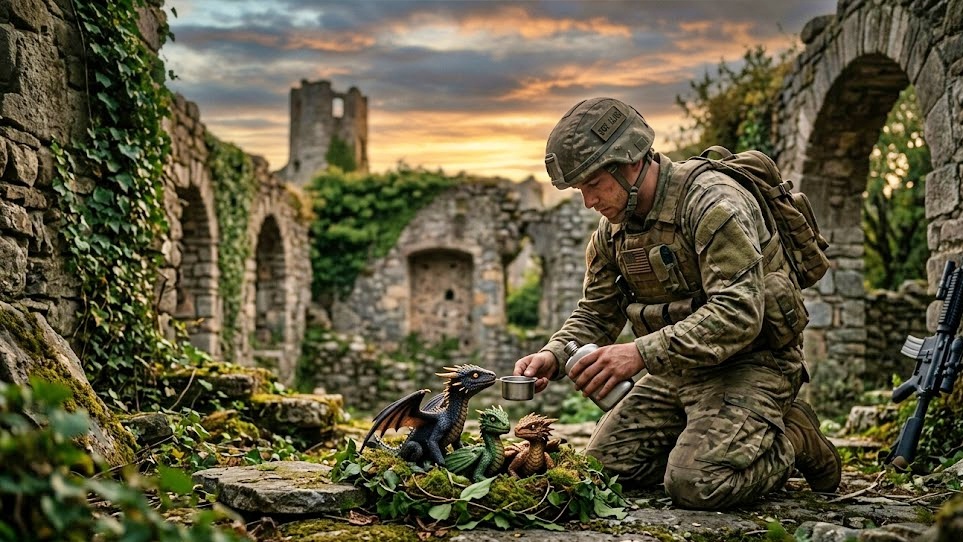
He did not like what it usually meant that he found out from a base cook that Voss was asking questions about biological recovery in the grid sectors around the old city. Someone Reed did not know who and the not knowing sat cold in his stomach had apparently mentioned unusual activity near the ruins. Voss had not found anything yet. She was asking questions, not taking action. But she was the kind of person who asked questions very methodically and who moved from questions to conclusions faster than most people move from conclusions to decisions. Captain Dura West stopped reading the corridor between the messaul and the equipment bay. Callaway she said not loud, not aggressive, just his name said in a tone that meant she wanted his full attention and she was going to get it regardless but he stopped. Wes was not tall. She had the kind of build that looked compact until you noticed how still she always was. The stillness of someone who had learned exactly how much energy to use and never spent more than that. Her eyes were sharp and her patience was genuine, which made it more serious, not less when she ran out of it. You’ve been spending a lot of time in grid 7, she said, running extended sweeps, Reed said. Thorough clearance. Thorough. She repeated the word without expression. Voss is asking about grid 7 specifically. Reed kept his face steady. There’s nothing in grid 7. Wes looked at him for a long moment. She was very good at those moments. Reed held still and let it happen. I’m going to ask you one question. Wes said finally, and I want you to think carefully before you answer. He waited. Is whatever you’re doing in grid 7 going to become a problem for this unit. Reed thought about Rook’s shallow breathing getting stronger, about Lon sitting beside him in the dark as if it had simply calculated that this was where it was supposed to be. About Cinder watching the shelter door. Not if I can help it, he said. Wes held his gaze for another second, and she stepped back slightly, not agreement, but a pause. A window. I’m watching, she said. That’s all I’m saying. Reed nodded once and walked on. Outside, the sky over the ruins was clear and pale. Somewhere in grid 7, five hatchlings were awake and waiting. One of them was small and still too pale at the edges and had 12 days left before a biological window would begin to close. Reed walked faster. The smell came first. Reed had been with the hatchlings long enough to know their smells. The warm, dry, faintly smoky scent of the shelter when all five were sleeping. The sharper smell of fleck when it was excited. The clean cool scent that Lon carried like something mineral and still. He had learned these the way you learn anything you live closely with. Without trying, just by being present long enough, this smell was different. It came from outside, from the wider ruins, and it moved with the wind. Heavy, musky, with something underneath it that was almost rotten, but not quite. more like a thing that had never bothered to wash because nothing had ever made it feel like it needed to. Cinder smelled it first. Of course, Cinder did. The bold hatchling went still in the middle of eating, head up, nostrils working in fast short pulls. The others noticed immediately. Hatchlings read each other the way instruments in a set respond to the same frequency. Grit backed up against the far wall. Lon moved closer to the shelter entrance and stopped there, watching outward. Fleck, for the first time since Reed had known it, made no sound at all. Rook pressed against Reed’s side. Small and trembling duck Gausian had come to the ruins that afternoon and was sitting near the outer wall when the smell arrived. Reed saw the old alien stand up from across the room. Slow, careful, but with a tension in it that Reed had not seen from Gausian before. War beast Gausian said low almost a murmur. It has found the scent of the clutch. Reed was already up. How big? Larger than the mother. Reed did the math on that fast and did not like the result. He moved to the shelter entrance, put himself in the doorway, and looked out into the ruins. The light was fading. He could see the open section of the building. Broken columns, fallen stone, open sky at the far end where the outer wall had come down entirely. He could not see what was making the smell. Then he could tee came in through the collapsed outer wall, slow and deliberate, the way large predators move when they’re not afraid of anything. It was lower to the ground than the mother had been, built more heavily with a blunt, wide head and legs that were thick as columns. Its scales were almost black. Its eyes were a flat pale gold that caught the last light and threw it back without warmth that it was not young. This was an old creature, old and very large, and it had sent it something it wanted. Reed checked his weapon. Standard issue plasma rifle. Good against lightly armored targets. Against something this size at this range, it would hurt it probably. Maybe slow it down. Dot. He reached for his comm’s unit and then stopped out. If he called for support, they would come and they would find a shelter and the hatchlings and the entire situation he had been building in secret for over a week. Everything would end before the two weeks were up. Before the bonding window closed, he put the comm’s unit back. Dog Gausshian appeared beside him. You cannot fight it alone, the old alien said. I know, Reed said. Then call for help. I can’t. A pause. You can’t. You are choosing not to. Reed kept his eyes on the war beast. It had stopped moving. It was watching him, testing the air, deciding if I call for help, this all ends tonight. The hatchlings go into a holding pin and I go into a debrief room and none of what we’ve done means anything. Galshin was quiet for a moment. Then very softly. You understand that it may end tonight anyway. Yes, Reed said, but not the same way. He stepped out of the doorway into the open space between the shelter and the warbeast. He made himself visible, stood upright, stopped moving, let the creature read him fully. He raised a rifle and held it ready, but did not fire. The war beast lowered its head, growled. It was a sound that did not need translation. It meant move or be moved.
Reed did not move. He was aware from the corner of his eye that Gausian had stepped back, retreated to the outer wall. He did not blame the old alien. He did not look away from the war beast. The creature took one step forward. Reed thumbmed the rifle to full charge and held it. Then something moved past his right leg. Cinder. The bold hatchling walked past Reed at a steady pace and stopped just slightly ahead of him in front of him and faced the warbeast directly head level. Still no sound at Reed’s breath caught. Then Lon came on his left. Same pace stopped beside Cinder. Grit came next slower with the careful, reluctant energy of something fighting its own fear. But it came. It placed itself beside Lon and did not run. Fleck came in fast as Fleck always did everything and stopped hard beside Cinder, wings halfopen, making a sound somewhere between a hiss and a bark. And then last, Rook came. small rook, pale at the edges, breathing too fast, crossed the ground between the shelter and Reed’s position and pressed against Reed’s left leg. Not in front, not like the others, just beside him, small and trembling and present. Reed looked down for one second at Rook, then back up at the war beast. The war beast had stopped. It was looking at the five hatchlings spread across the ground before it, reading them the same way it had read. Then it did something Reed did not expect. It raised its head, not to strike. The motion was different. It was the motion of a creature reassessing. Reed fired twice. Not at the body. He aimed low at the creature’s front feet. Direct hits that cracked stone and sent bright plasma across the floor. Not lethal. A statement. The war beast pulled back. One step. Two. The flat pale eyes held on the group of them. the human, the five hatchlings, all standing together in the half dark. And then it turned. Not fast, not frightened, but it turned. It moved back toward the collapsed outer wall and was gone into the failing light. Reed stood where he was for a long moment after the sound of it faded. Behind him, Gausin had not moved. The old alien was standing near the wall, very still, watching. Reed lowered the rifle. His hands were steady. He was surprised by that. Cinder turned around and walked back to him, sniffed his free hand, then sat down directly on his boot as if staking a formal claim. “Gun,” Reed said without turning around. “I am here,” the old alien said. “Is that what you meant?” The bonding, a long pause, not hesitation. More like the pause of someone choosing the most accurate word from a large number of options. The ceremony, as I described it, requires the caretaker to stand between the threat and the clutch, and the clutch to choose whether to flee or to stand with the caretaker. Galshian’s voice was quiet and careful. I said the ceremony requires a moment of real danger, not staged, real. Another pause. What I did not say, because I did not think it needed saying, is that the choice to stand does not have to be made behind the caretaker. The old alien stopped, then softer, it can be made in front of them. Reed looked down at Cinder sitting on his boot at Rook still pressed against his leg. At Lon, who had already walked back to the shelter entrance and was watching everything with the same calm, level eyes it had always had. The bond is made, Galshin said simply. What happened here tonight? This was the ceremony. All of it. The threat was real. Your choice was real. Their choice was real. Reed sat down on a chunk of fallen stone because his legs decided it was a good time. Cinder adjusted position without apparent concern. “Right,” Reed said. “Now,” Gausin said, moving closer and settling beside him. “We must talk about what comes next. Because the window was the small problem. The large problem is that your ambassador knows where you have been, and she is not going to stop asking.” Reed looked at the darkening sky. Somewhere beyond the ruins, back at base, Nervas was sitting with her questions and her plans and her very organized intentions. He looked at the five hatchlings settling around him in the dark. “Then we deal with her,” he said. The hearing room at the forward base was not built for important decisions. It was a repurposed storage unit. plain walls, folding chairs, a table that had one leg slightly shorter than the others and rocked if you leaned on it. Reed had been in the room twice before, both times for minor disciplinary matters that had been resolved quickly. He sat in the same chair he had sat in both those times. Across the table, Ambassador Nravas had managed to make the folding chair look like a formal seat. She was organized and precise and her expression had the quality of someone who had already decided the shape of the conversation and was simply moving through it in sequence to Reed’s right sack Captain Duress who had not looked at him since they entered the room. I want to be clear about what I’m proposing Voss said opening a thin document on her tablet. The clutch is a significant biological asset. More than that, these are the last known survivors of a lineage with documented historical influence across multiple Draven Clan factions. Placing them in a properly resourced facility ensures their safety, enables scientific understanding, and creates a diplomatic avenue that currently does not exist. She set the tablet flat on the table and folded her hands over it. This is not about the soldier. This is about what the hatchlings represent and making sure that potential is not wasted. Reed said nothing. Voss continued, “Corporal Callaway’s care for the animals has been improvised. I’m not disputing that they survived, but survival and proper development are different things, and we are past the point where improvised care is appropriate.” She looked at him directly. “The facility I’m proposing has specialists, resources, control conditions. These creatures will thrive there. Reed kept his face still. He had been thinking about this conversation for several days, and he had decided going into it that he was not going to argue. Not because he agreed, but because he had learned something over the past 2 weeks in the ruins, that the loudest voice in a room is not always the most important voice. Sometimes the most important voice is the one that arrives last and says the least. Wes spoke for the first time. Voss, before we go further, there is a third party requesting to speak. Voss looked up. This is a closed review. The third party has standing under Galactic Compact articles. Wes did not look away from Voss. I’ve checked the articles myself twice. They have the right to speak. A pause. Then Vos said carefully, “Who is the third party?” The door opened. Galshan moved slowly which was simply how Gausian moved but there was nothing weak in the movement. The old alien came to the table and remained standing because there was no chair suited to Draven proportions and because standing in the old caretaker tradition was the posture of formal address. Voss looked at Galshin the way people look at variables they did not account for in their calculations. I represent the caretaker cast of the Draven dragon kin line. Galshian said in clear human standard, much cleaner than the broken phrases Reed had heard in their first meeting, and Reed understood that this too was a choice, a deliberate display of capability held in reserve. I’m the last living member of that cast with recognized standing. The clutch in a ruins of the old hatchery falls under my cash jurisdiction by Draven Law and by the terms of the Galactic Compact articles signed by the Human Diplomatic Corps 14 years ago. Voss opened her mouth slightly, closed it. Article 17, Galshin continued, specifically addresses bonded clutches, “A bonded clutch cannot be separated from its bonded guardian except by documented cause, showing harm or danger to the clutch directly caused by the guardian.” The old alien paused. There is no such cause. The Guardian kept five hatchlings alive through improvised care during a period of active warfare on a hostile world, including standing between the clutch and a full-grown war beast without support and without retreat. Another pause, smaller, sharper. Article 17 also requires that any claim against a bonded guardian be heard with the guardian’s advocate present. I am that advocate. The table was quiet. Voss recovered quickly. Reed gave her that she was good at recovery. The bond itself is in question. She said a formal bonding requires a ceremony. I have no documentation of the ceremony is not a document. Gausian said it is an event. I witnessed it. My testimony constitutes legal record under the compact articles. A pause. Unless your compact team is prepared to argue that Draven cultural legal standards should be overridden by human diplomatic preference, which they’re welcome to do, it will take approximately 2 years in the tribunal system and will be watched with considerable interest by every Draven faction still operating in this region. Another silence. Wes cleared her throat. I have testimony to add, she said. If the review is continuing, Voss looked at her. It is continuing,” she said in a tone that suggested she was recalculating. Wes turned a single sheet of actual paper on the table. She had always preferred paper, a habit Reed had found strange until now.
Over the past 11 days, I observed Corporal Callaway returning to grid 7 on seven separate occasions outside his assigned duties. I did not report this immediately because I chose to observe further before acting. She looked at the paper as she spoke, but Reed felt that she was not really reading it. She had already decided what she was going to say, and the paper was a formality. What I saw when I visited Grid 7 yesterday afternoon was a functioning care environment, clean, organized, thermally managed, five hatchlings in good health, including one that, by Gausian’s description, should not have survived its first week. Callaway built that with ration bars and salvaged thermal blankets and whatever else he could carry without raising flags. A pause. He is not a specialist. He has no training for this. What he has is the habit of solving the problem in front of him with whatever is in his hands and the refusal to stop until the problem is solved. She folded her hands over the paper. In my experience, that is what keeps things alive when the right conditions are not available, which they frequently are not. Reed looked at Wes. She did not look back. She kept her eyes on Voss. Voss was quiet for a long moment. Then she picked up her tablet and made a note on it. Her expression had not collapsed. It had shifted the way a plan shifts when it hits unexpected terrain and has to reroute. I’ll need to review the compact articles, she said. Finally. Take your time,” Gausian said without particular warmth. The hearing recessed. Reed walked out into the narrow corridor and stood against the wall. The base noise moved around him. Distant machinery, voices, the ordinary sounds of a place that was still running on the logic of war, even though the fighting had moved elsewhere. Wes came out behind him. She stood beside him. They did not speak for a moment. “You didn’t have to do that,” Reed said. I know, Wes said. Another pause. She’s not finished, Reed said. No. Wes agreed. She’ll look for angles. That’s what she does. But she’ll look for legal angles now. And the legal ground isn’t good for her. Wes glanced at him sideways. You have an old alien, a formal caretaker declaration, and 14-year-old compact articles that nobody in the diplomatic corps apparently read carefully when they signed them. A very small pause. also five dragons who apparently walked in front of a war beast for you, which I have to say is the strangest thing anyone in this unit has done to build a legal case. Reed almost smiled. Wes looked away. Go back to your shelter, she said. I’ll handle Vos for tonight. Reed went. The ruins were cool and dark when he arrived. He ducked through the shelter entrance and stopped to let his eyes adjust. The five hatchlings were there. Fleck immediately climbed halfway up his leg. Grit observed him from a distance with deep dignity. Lon moved silently beside him like weather. Cinder pressed its head briefly against Reed’s hand, and Rook, pale at the edges and still too small, made a soft sound and settled against his boot. Reed sat down in the middle of all of them and did not say anything for a while. Then, quietly, to no one in particular, Wes called you five dragons. Just so you know, Fleck made a sound. Cinder flicked its tail. Rook breathed steadily against his leg. Reed leaned back against the wall and looked at the strip of dark sky visible through the gap in the roof. The stars over this world were different from home. Closer together, more crowded, a dense scatter of light instead of clean, separate points. He looked at them for a long time. He was still a soldier on a war-damaged alien world with no clear plan and a legal situation that was not yet resolved and a diplomatic officer who was definitely not finished with him. None of that had changed, but all five of them were breathing. And the old alien who had lost everything had found something to stand up in a formal hearing and fight for. And Wes, careful, deliberate, never waste a word, Wes, had put her name on a piece of paper and read it out loud. Reed closed his eyes. He was not alone in this. That was new. That was, he thought, not nothing. Three months is not a long time. In the span of a war or a legal process or the growth of a species, 3 months is a breath, a pause, a small thing. But inside of 3 months, if you are paying attention, entire worlds can shift. The ruins of the old hatchery had changed. The outer walls had been cleared of the worst of the rubble. The intersection was reinforced with salvaged material and some proper building composite that Galshin had sourced from a trade contact in a nearest functioning Draven settlement. The floor was clean. There is actual insulation in the walls now, not just layered thermal blankets, though two of those remain because Fleck decided they were a permanent feature and Reed had learned to pick his battles. The Galactic Compact Tribunal had released its ruling 6 weeks after the hearing. Vos had found her angles, three of them, and each one had been addressed one by one by Galshin’s formal submissions and by the legal team that the human diplomatic corps had quietly and with some embarrassment been required to assign to Reed’s side of the case once the compact articles made it unavoidable. The final ruling was not complicated. The bond was recognized. The guardianship was legal. Ambassador Nervos had moved on to a different post. Reed did not know if this was a defeat for her or simply a reassignment. He had decided it did not matter. What mattered was the title now attached to his name in the Galactic Compact Registry. Bonded guardian, high flame clutch, Draven lineage. The first human to hold such a designation under Draven law. He had not framed the certificate. It was folded in his pack. The hatchlings were not the same creatures they had been 3 months ago. They were bigger. All of them significantly bigger, which should not have surprised him, but did every time he turned around and found that Cinder’s head now reached his chest when the hatchling stood upright. Their wings had straightened and filled out, not ready for flight. Yet, Galshin said that was still months away, but they held them differently now, with intention rather than awkward crumple. Cinder had not changed in personality. still bold, still the first one through any doorway, still the one that made eye contact with every new person who entered the sanctuary, as if conducting a rapid assessment that would determine all future terms of engagement. What had changed was the weight behind it. There was something deliberate in cinder now that had been instinct before. The boldness had grown into something that understood itself. Grit had become Reed’s shadow during construction. Every time Reed had been working on the walls or the roof reinforcement, Grit had been present, watching each step, occasionally pressing a scaled head against a section of wall as if checking the structural integrity. Reed had started narrating what he was doing, not for any reason he could clearly explain, just because it felt like the right thing to do when someone was watching that carefully. Grid had listened to all of it with an expression of deep consideration. Lon had surprised everyone by turning out to be the most strategically minded of the five. Three weeks ago, during a brief visit from a group of Draven faction representatives who had agreed tentatively and with significant skepticism to a first meeting with human diplomats, Lon had positioned itself between the two groups before any human or Draven official had thought to arrange the seating. just walked into the center of the room and sat down. Not blocking anyone, not threatening anyone, just present in the middle, looking from one side to the other with those calm, level eyes. The meeting had lasted 4 hours. No previous meeting between that faction and human representatives had lasted more than 40 minutes. Reed did not know if Lon had calculated this or simply felt where it should be. He was not sure the distinction mattered. Fleck had eaten someone’s diplomatic satchel. This had been unfortunate but not catastrophic. Reed had replaced the satchel. And Rook Rook was the loudest one. Now that was the thing that still startled Reed sometimes coming back to the sanctuary after a day away. The sound that met him at the entrance. The sharp happy noise that Rook made when Reed’s boots crunched on the rubble outside. the smallest one, the pale one, the one Reed had spent two nights keeping warm with a thermal blanket and soft ration pieces and nothing but stubbornness. That one was now the first to announce his arrival. Every single time before any of the others had moved.
Galshin was there most days. That had changed, too. In the early weeks, the old alien had appeared in the evenings and left before dawn, maintaining the long habit of someone who had learned not to stay anywhere too long. Now, Galshin had a corner of the sanctuary that was clearly claimed, a seat of stacked flat stones, a small collection of tools and materials used for teaching Reed the old caretaker practices, and a worn cloth that Fleck had stolen twice and been made to return both times. Galshin did not talk about what it meant to have a place to be, but the old alien stopped leaving before dawn, and that said enough. The teaching went both ways. Reed had learned the driving caretaker practices, the feeding rhythms, the handling approach, the way to read the hatchling scale patterns for signs of stress or health. Galshin had learned things from Reed that were harder to name. The habit of fixing a problem with whatever was available. The refusal to consider a situation closed just because it looked closed. the particular human tendency to care about something more than was strictly rational and then let that irrational caring become the reason to keep going. “You humans,” Gausian had said once while watching Reed improvise a new feeding tray from a broken equipment panel and two pieces of wire are not as clever as you think you are. I know, Reed had said, but you are more stubborn than anything else I have encountered in a very long life. A pause. Stubbornness and caring are not the same thing. But when they operate together, they produce something unusual. Reed had not answered. He had finished the feeding tray and tested its stability and put it in position, and Rook had used it first as always, and that had been enough of an answer. Wes came on the day she was transferring out. Reed heard her boots on the rubble before she ducked through the entrance, because by now he could identify most people by the sound of their approach. She stood just inside the doorway and took in the space. The reinforced walls, the clean floor, the five hatchlings distributed around the room in various states of activity. Fleck was trying to remove a bolt from the new wall fixture. Grit was sitting in the corner watching Fleck with an expression that suggested extensive private criticism. Lon was near the far wall, still as always. Cinder was in the middle of the room looking at Wes. Wes looked back at Cinder. Cinder decided she was acceptable, which Reed knew because the hatchling moved aside one step and went to go sit by loon. Fleck noticed Wes specifically noticed her hat, a softsided unit cap regulation, but worn in the particular way that people who have owned the same cap for years were thanks. Fleck moved toward it immediately with the focused attention of a creature that has identified a target. Reed opened his mouth to say something. was put up one hand. She was looking at Fleck with an expression Reed had never seen on her face before. Not softness exactly, more like the expression of someone remembering what it felt like to find something funny. Fleck took the hat. Wes let the hat be taken. Fleck turned it over twice, apparently found it acceptable, and carried it to a corner where it was set down carefully beside the thermal blanket. Wes watched all of this as she made a sound. quiet, short, but real, a laugh, actual and unguarded. Reed thought it might be the first time he had heard that from her in the entire time they had served together. She did not stay long. Wes was not a person who extended goodbyes. She said she was glad the situation had resolved. She said Reed had made a mess that had turned out in an infuriating way to be the right mess to make. She said she hoped the Draven meetings went somewhere useful. She took her hat back from Fleck’s corner on the way out. Fleck watched her go with an expression that suggested the matter was not fully closed. When she was gone, the sanctuary settled back into its ordinary sounds. Galshin was working on something in the far corner. The hatchlings were distributed in their usual ways. The light through the reinforced roof gap was late afternoon gold, long and warm. Reed moved to the far wall, the oldest wall, the one that had survived the original collapse, the one that had been part of the building when the mother was still alive. He crouched down and looked at the section he had cleaned 3 days ago. Old stone. The material was rough under his fingers, pale gray with darker veins running through it. He had a marking tool in his pocket, a simple one, the kind used for labeling equipment panels. Sharp point permanent line. He had been carrying it for 2 weeks, waiting until the right moment, which had not been a defined moment, but which he had recognized when he felt it. He drew the first mark, small, careful, nothing elaborate, a simple shape that could be read as a small flame or a wing or just a line if you were not looking for meaning. For Cinder, he made it the height where Cinder’s shoulder would be if the hatchling were standing beside the wall. He made the second mark for grit, slightly squared at the base. The third for loon, thin, a little curved.
The fourth for fleck. He made this one slightly crooked because it felt right. And the fifth he made at the lowest point close to the floor for Rook. Small, clean, the most careful of all of them. He stood up and looked at the five marks in a row on the old stone wall. Behind him, Rook made a sound. The usual announcement of his return, even though he had never left, which was the thing about Rook that still made him feel something he did not have a word for. He turned around and the smallest hatchling was looking at him with bright, alert eyes, waiting for whatever came next. Galshin spoke from the corner without looking up from a work. “What did you put on the wall?” “Marks,” Reed said. “For them. For them,” Reed said. Galshin was quiet for a moment. In the old tradition, the caretaker marked the wall of the hatchery when the clutch was established to say, “This place is claimed. Something lives here that matters.” Reed looked at the five marks. “I didn’t know that.” “No,” Gausian said. “You didn’t.” A pause. “You did it anyway.” The light shifted. Cinder came and pressed a shoulder against Reed’s leg. comfortable and heavy, a creature that had decided where it belonged and saw no reason to question it. The stars would come out soon. The Draven faction representatives were due back for a second meeting in 4 days, and there was preparation to do, and Galshin had things to teach him, and Fleck was going to find something to dismantle before morning. Reed stood in the sanctuary that had been ruins with five growing dragons around him and an old alien in the corner on a world that was slowly carefully in pieces learning how to stop fighting. He had not saved the world. He had not meant to change anything. He had just stayed and fed and stood between something small and something that wanted to destroy it. He had just done something small, something specific, something that on the first night had felt like the only reasonable thing left to do. It turned out that was